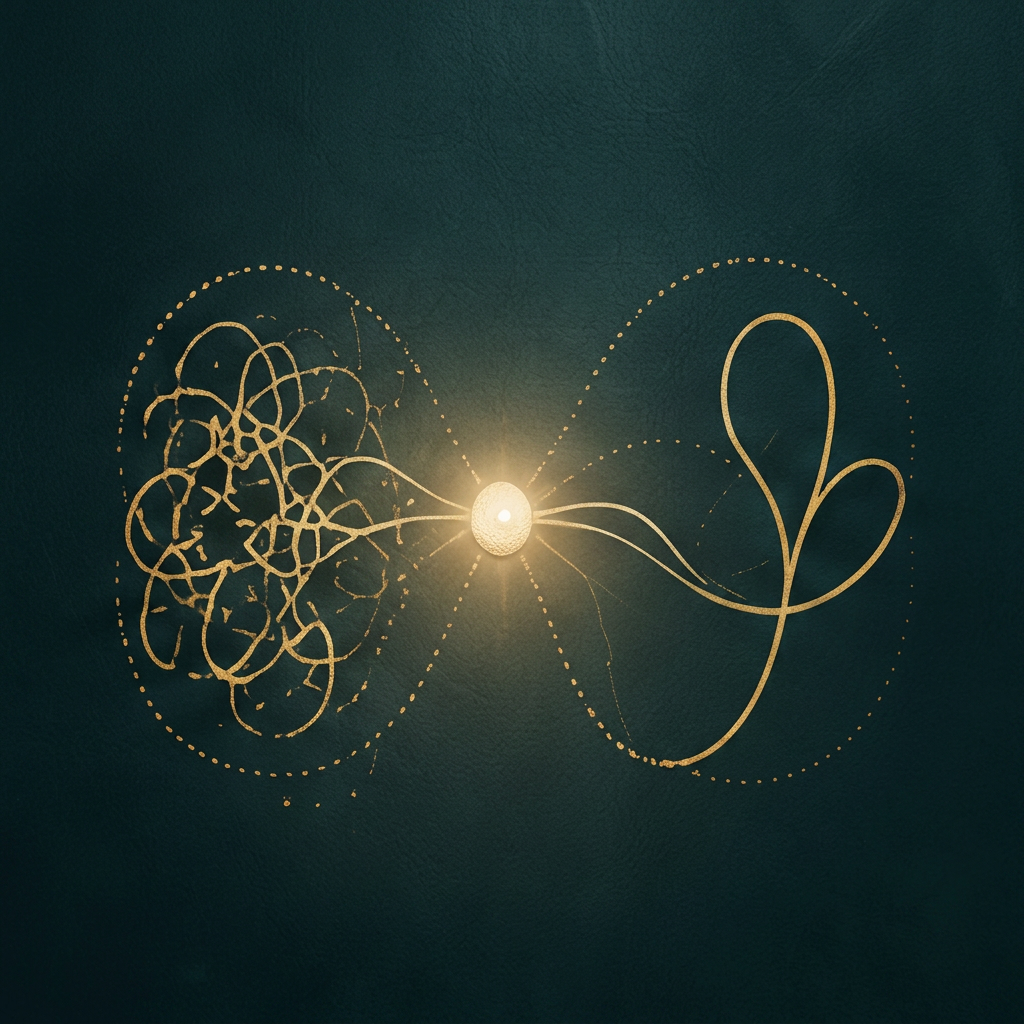
PAUSE
"I slow down long enough to notice what I am actually feeling, needing, and wanting."
Love & intimacy
In intimate life, PAUSE asks you to notice when you've left your body — performing instead of present. The body often knows something is wrong before the mind does. Stopping gives you access to that knowing.
What to do
Before any intimate encounter, take three breaths and ask: am I here? If the answer is no, that's your PAUSE.
When to press it
When you're going through the motions. When sex feels mechanical. When you're performing intimacy rather than experiencing it.
Why this rewires you
PAUSE interrupts the automatic. When you're activated — flooded, reactive, overwhelmed — your brain's threat system has taken over and your thinking brain has gone offline. Pressing PAUSE creates the gap where choice lives.
If overused
Too much PAUSE can slowly become emotional avoidance disguised as wisdom or self-control. You may delay conversations for too long, overthink your feelings instead of expressing them, or convince yourself you are being 'careful' when you are actually protecting yourself from vulnerability. Partners may experience this as distance, emotional unavailability, or mixed signals.
If underused
Without PAUSE, relationships can become emotionally reactive and exhausting. You may say things you regret, escalate conflict quickly, panic-text, pursue reassurance impulsively, shut down suddenly, or make decisions from emotional flooding instead of clarity. Intimacy feels less safe when everything happens in the heat of the moment.
Sign in to press privately.
Sign inPrivate journaling. Only you ever see this.
When was the last time my body told me something I overrode? What was it saying?
What would it feel like to stop before I disappear — not to fix anything, just to notice?